 The call to spiritual transformation is the call to freedom.
It is a prophetic call heard within the depths of the mind, heart and soul, a calling from God, resonating in our consciousness, in our environment, in each every breath that we breathe and space that we take up.
It is a voice of strength, illuminating us with faith. It is a voice of deliverance, reminding us of our freedom. It is a voice of power, anointing us with grace. It is a voice of divinity, blessing us with love. It emanates everything that embraces us: the blood in our veins, the cells in our bodies, the vision that we move forward in.
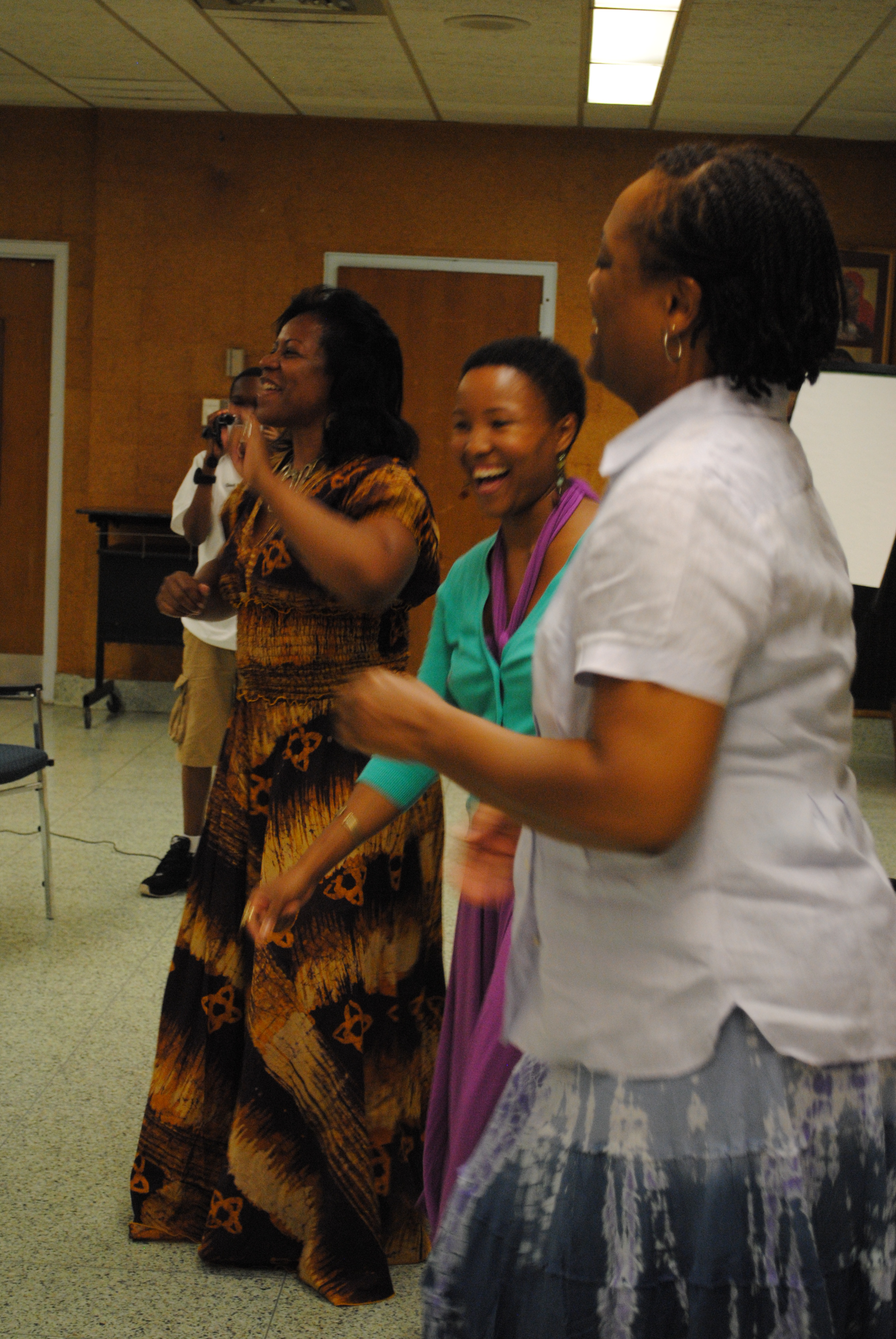
If you listen, you can hear it, feel it, touch it, taste it, dance it, sing it, clap it: an ancestral call to raise us from semi-consciousness to a state where we can see God.
 Malidoma Patrice Some teaches us that “ancestors have an intimate and absolutely vital connection with the world of the living. They are always available to guide, to teach, and to nurture. They represent one of the pathways between the knowledge of this world and the next. . . . [T]hey embody the guidelines for . . .all that is most valuable about life.” (Of Water and Spirit (Putnam: New York, 1994) at p. 9)
 If I am still, I can hear them distinctly – not downtrodden as they were in the physical world, but holy and divine. Their call is one of deliverance. It is a call heard in the midnight hour, in the rustling of the leaves, in the sip of the living water: a call to Spirit and to Truth.
It is a call that no one can stifle, even those who refuse to hear it. It is a call that is at once collective and individual. In order to recognize our worth as individuals and as a species, we must not merely hear it but respond to it. No matter what our life circumstances may be, we are always free to do so.
Enslaved Africans heard the call, and their survival is a testament to their response. God called on many of our ancestors in a profound way, and great men and women like Nat Turner, Frederick Douglas, Harriet Tubman, and Sojourner Truth listened and acted.
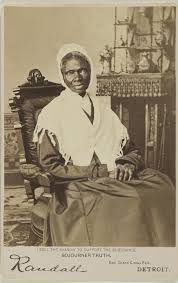
Take Sojourner Truth, for example. Her spiritual transformation began when she had a vision that her former “master,” from whom she had escaped, would visit. Truth told her “mistress and master” that her former “master” would come that day and she would leave with him. Her current “owners” were surprised because they had not heard that he would come.
Sojourner Truth took her child and prepared to leave with him. As she approached him, however, she had a more compelling vision: “God revealed himself to her . . . [and showed] that He was all over — that He pervaded the Universe.”
Even though she was physically enslaved, Truth realized that “there was no place, not even in hell, where [God] was not.” When her attention was finally “called to outward things, she observed her `former master’ had left” without her and her child. She walked back into the house, “exclaiming aloud, `Oh, God, I did not know you were so big.’” (Narrative of Sojourner Truth (as told by Sojourner Truth), at 35-36)
 God is big indeed–a power too awesome and all- encompassing to even conceptualize. God fills our hearts; embraces our bodies, blesses our souls, lights the sky above our heads, strengthens the earth under our feet. God is the sun and the stars and the moon.
God is the essence of life, in which we live and move and have our being. When we begin to acknowledge that God is awesome and we are made in God’s image and likeness – not a he God but male and female, according to Genesis – we open our consciousness to realize the awesomeness of our own true nature.
Harriet Tubman understood the power of the Divine and trusted in the Presence of God. She escaped enslavement herself and risked being recaptured, beaten, and killed when she returned again and again to help hundreds of Africans escape slavery in this country. Her courage and strength are indicative of her deep faith in the power of God.
During one mission in a bitter snowstorm, she found that the enslaved Africans she intended to help escape were not at their appointed meeting place. With only a tree for shelter, she did not turn back and refuse to wait in the storm. Apparently knowing God would protect her, she stood behind the tree for the entire night in the snowstorm until those she came to help arrived.
The abolitionists who wrote of this account depicted her as an ignorant child instead of a powerful spirit woman and “her people’s” trust of God as naive. But Jesus taught us that we must be childlike–that is unconditional and complete–in our trust to enter the kingdom. Harriet Tubman and many others suffered the indignity and horror of American slavery, yet the tremendous power of God kept them moving toward freedom.
Despite the beatings and other insane acts of violence against the minds and bodies of enslaved Africans in this country, no one could master them as long as they mastered their own consciousness. Even if we appear to be free, we are “slaves” to external conditions if we do not embrace our own self-worth and master our own mind, soul, and spirit.
By external conditions, I mean the things we can see with the physical eye – the appearance of poverty, the appearance of illness, the appearance of terror. Of course, these things do exist in the material world, but we do not have to be controlled by them. When we realize that God is the movement and momentum underlying all things and that we live, move, and have our being in God, we attain mastery over ourselves.
Sojourner Truth was her own master because she was directly connected with Spirit. Despite her circumstances, she was called to transform herself into a powerful leader when she realized that God is everywhere and bigger than any man-made institution or three-dimensional, time-bound realm.
 God moved Sojourner Truth to sojourn for Truth in a manner that would liberate not only herself but other captured Africans. She remains a master teacher of the principle that God is much larger than any beliefs or concepts we might have – larger even than existence as we know it. Her life and the lives of other Africans in this country are a critical example, rarely acknowledged, of how the recognition of God pushes us far beyond even our greatest expectations.
Like Sojourner Truth, Nat Turner, who led a slave revolt in Virginia in 1831, was one of the greatest spiritual masters of his time. He claimed that the “Spirit” spoke to him, saying, “Seek ye the kingdom of Heaven and all things shall be added unto you.” By Spirit, he meant “the Spirit that spoke to the prophets in former days. “ Turner prayed continually for two years “whenever [his] duty would permit – and . . . had the same revelation, which fully confirmed that [he] was ordained for some great purpose in the hands of the Almighty.” (The Confessions of Nat Turner, The Leader of the Late Insurrections in Southampton, Va., As fully and voluntarily made to Thomas R. Gray, Nov. 5, 1831) Turner understood that obedience to the call of God is the source of true freedom.

What do these African American prophets teach us? That when we recognize the presence of God everywhere in our lives and open our consciousness to tap God’s infinite power, we can do more than we could ever imagine – not so much for our personal gain but for the benefit of all humanity, which is where our true worth lies. We are able to taste the sweetness of freedom when we realize that there is no separation between all that we are and all that God Is.

 Last night, I was watching Will Smith’s movie Collateral Beauty, about a man who loses his only child, a daughter who was only six years old, and the pain that he grows through in order to return to himself. The movie raises the question what is “collateral beauty”? We always talk about collateral damage, the negative secondary or by-product of an accident, catastrophe or tragedy that brings additional pain, hurt, injury, and suffering. But we never talk about collateral “beauty,” which is, to me, the ability to see the glass half-full instead of half-empty, the ability to see the presence of God, even in the midst of messiness, turmoil and strife.
 The movie Collateral Beauty focuses on three attributes, which in many respects reflect mind, body and soul: death, time and love.
 The collateral beauty of our challenges is that they allow us to re-start, to re-invent, to re-create, to re-establish who we are – to get rid of the old so that the new can emerge. In John 8:51, Jesus says “Very truly I tell you, whoever obeys my word will never see death.” Nothing and no one can destroy the pure presence of Spirit expressing as us. So we get up from our mats and walk. We rise like a phoenix from the ashes. In three days, we find our temples restored.
 It doesn’t matter what or who we are confronted with in the world, nothing or no one is too great for God. Even what others mean for evil, God means for good. As the scripture teaches us, the battle is not ours, it is God’s. No weapon formed against us shall prosper.
 The collateral beauty of disaster or difficulty is that we can experience the fullness of the perfect divine order of life, realizing that despite appearances, we are in our right space at our right time.
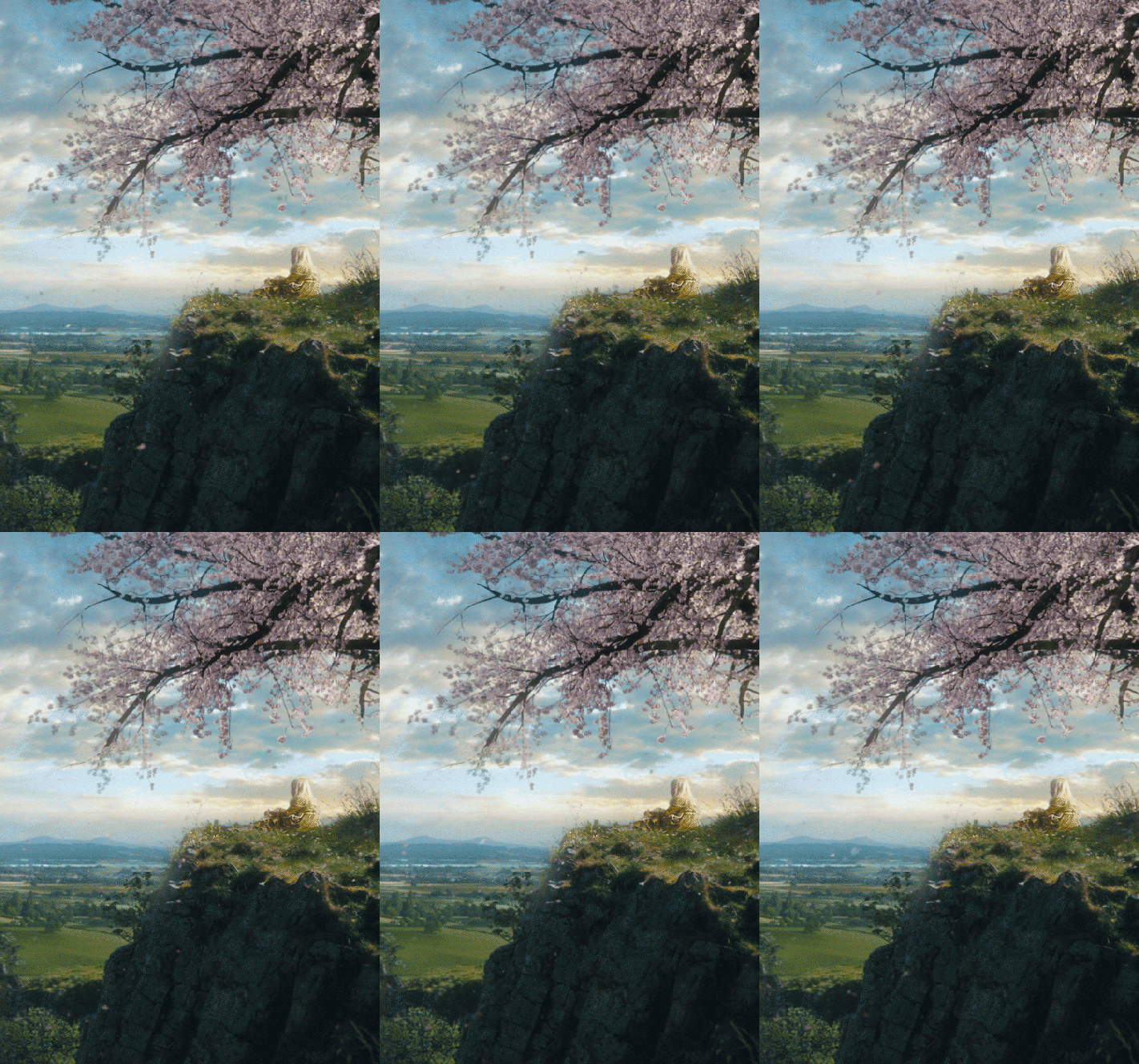 Collateral beauty is more difficult to see because we are distracted from seeing the good everywhere present, the birth of Spirit all around us, the widow’s oil that keeps pouring, the baskets of fish and bread left over. The Psalmist says (27:4) “One thing I ask from the Lord, this only do I seek: that I may dwell in the house of the Lord all the days of my life, to gaze on the beauty of the Lord and to seek him in his temple.”
 So even when we are blinded by the events and transgressions of the world, through their impact, we are given a new vision: one that allows us to see God in every word, every breath, every event, and every circumstance.
 Or I can step out into the sunlight of a new day, a day that I have never seen before. I can release the baggage of yesterday. I can climb a new mountain and cross the waters of new faith, realizing that this, too, shall pass, but more importantly, that this – whatever this is, is the blessing of collateral beauty: a small crack in the universe, where I can see God.
 This is from a previous class on the teachings of Joel Goldsmith.
 This was taken from the 7th Section of Joel’s book



 I am love in all things.
 This is a prayer that we not lose ourselves in the fabric of the law firm, the corporate world, the police force, the military, the government, the university, the hospital—or wherever we find ourselves collectively giving to society—but that we understand that Spirit put us there for a reason, and part of that reason is what we as individuals bring as separate, creative expressions of Spirit.
 This is a prayer that we have the vision and the faith to celebrate our gifts with every task that we perform by never being afraid to speak our truths and tell our stories and do our best. Being the best at who we are in all of our imperfections, not perfection itself, is a blessing.
 This is a prayer that we put our egos aside to contribute what we can, whatever guise it may take, and that we be there to mentor those who need mentoring and that we grow and improve ourselves and increase our knowledge. We pray that we continually bless others in ways we cannot even imagine.

 If others second-guess our skills and abilities, it only shows their shortcomings, their fears, and their need to grow, not our own. More importantly, the opinions of others are grossly over-rated and give us an opportunity to trust our own judgment. This means that we must be open-minded and receptive to good advice but know the difference between someone else’s judgment and our own wisdom – by developing a discernment that is not merely intellectual but Spirit- based.
 Centering in Spirit helps us stand strong in the workplace, to be a tremendous success and a great asset because Spirit guides us continuously. Regardless of what we are doing, all we need to do is to be open and receptive to that guidance.
 This is a prayer that we center ourselves in the guidance that Spirit gives us, especially in the midst of those who do not recognize our greatness, those who question our worth, those who diminish what we can offer. Only God realizes our greatness, and God puts us in our right time, at our appointed place to contribute, develop, and move forward. This is a prayer for us to shine our light, our gifts, our talents – that only we can offer.
 This is a prayer that we find a space for Spirit at work. We spend such an enormous amount of time giving to our jobs and our businesses that if we do not take Spirit there, it is absent for 75% or more of the time that we live. There is no separation between us and Spirit merely because we leave church, or temple, or synagogue, or mosque. This is a prayer that we continue to be centered in Spirit—particularly in places that are most in need of its presence. This is a prayer that we allow Spirit to use us and to be so centered in Spirit that we realize it is with us—especially at work. This is a prayer that we open our consciousness to the presence of Spirit in the mundane and everyday, ordinary encounter. . . .
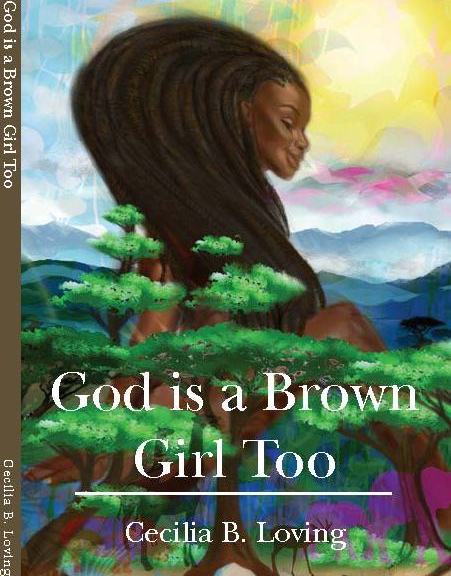
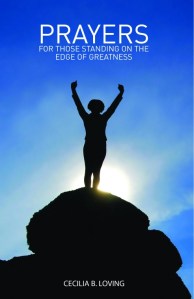 THIS IS AN EXCERPT FROM REV. LOVING’S BOOK
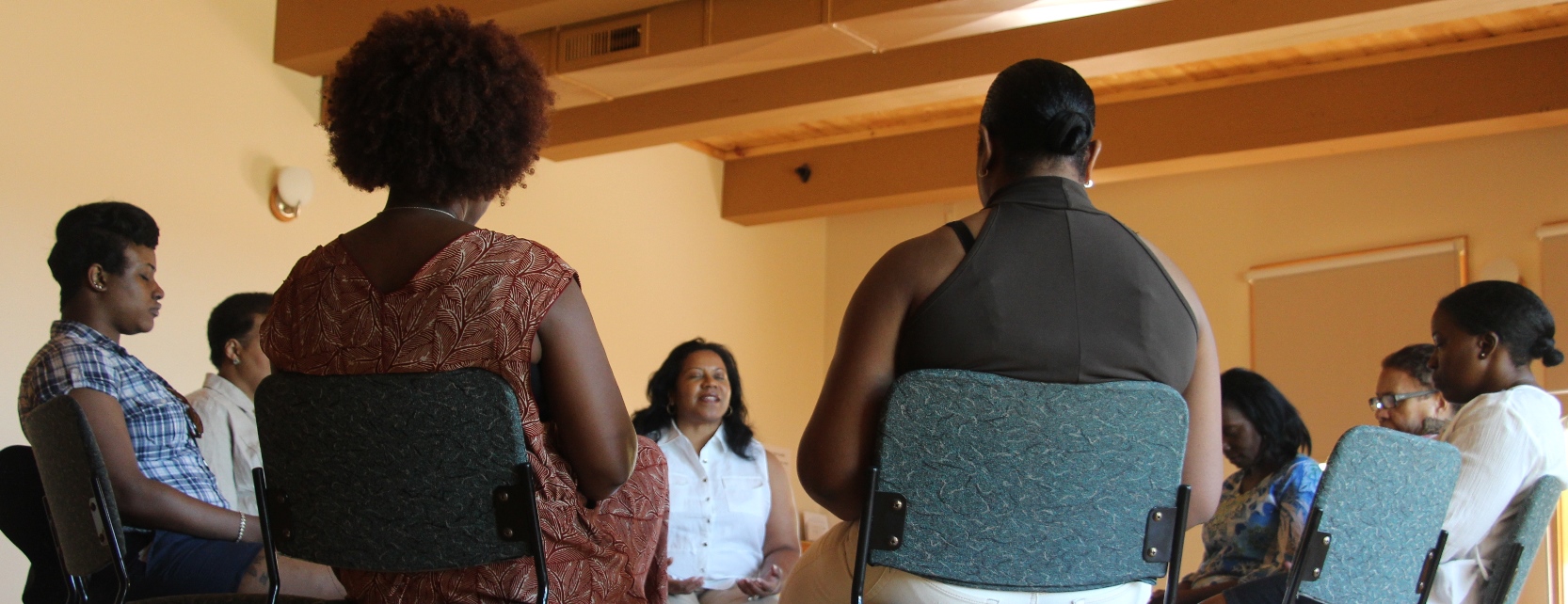
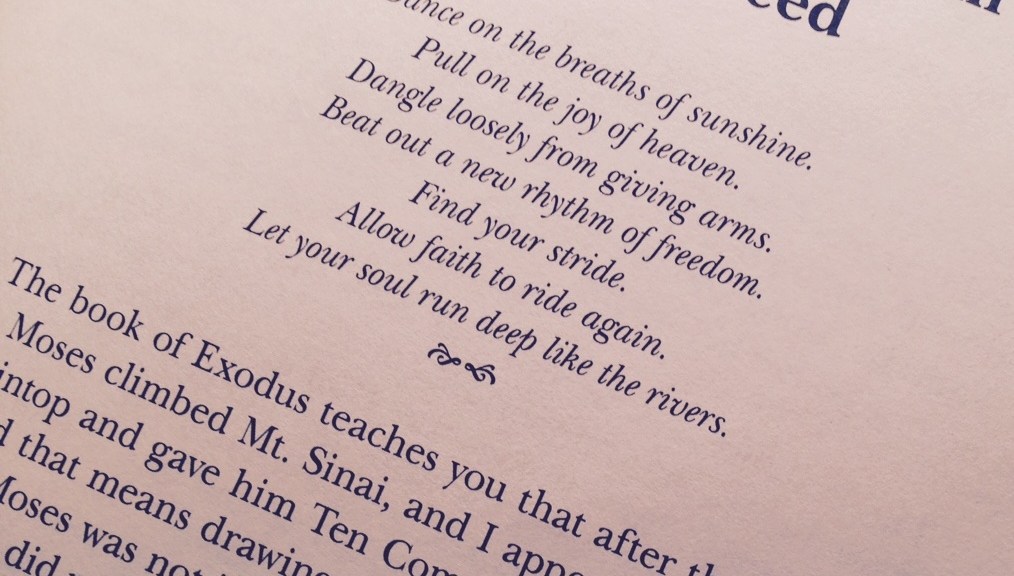
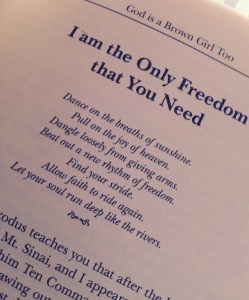
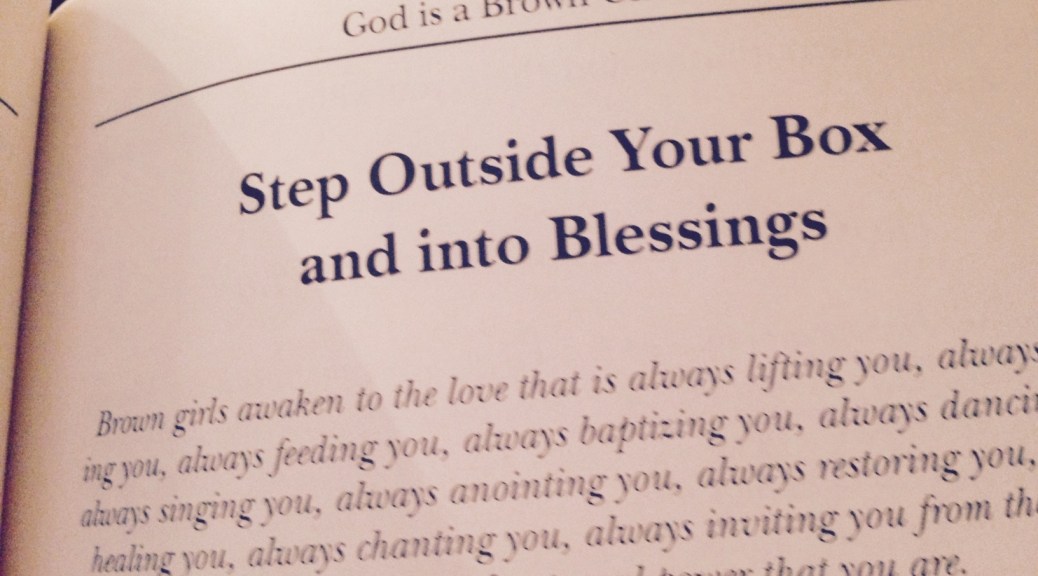
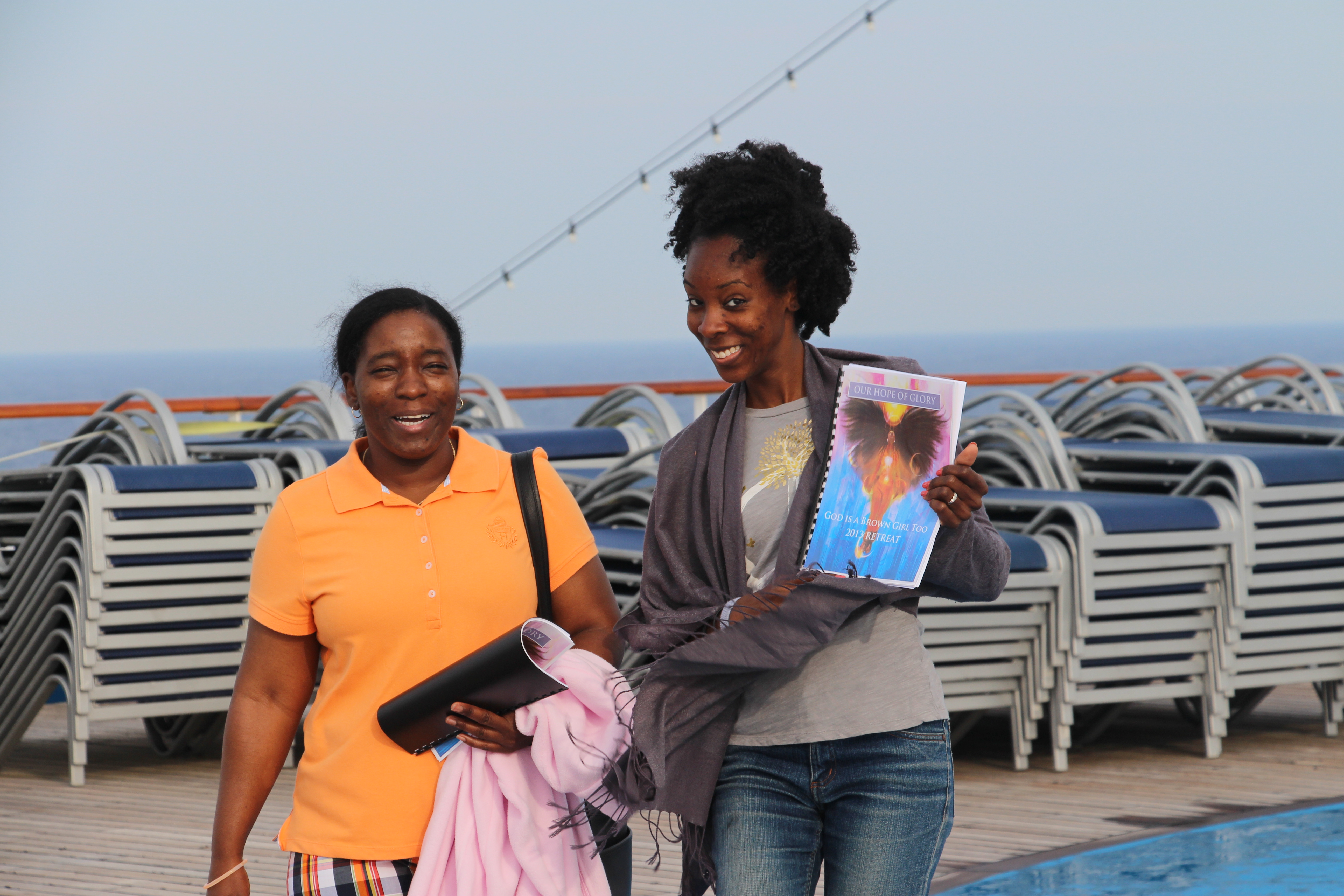
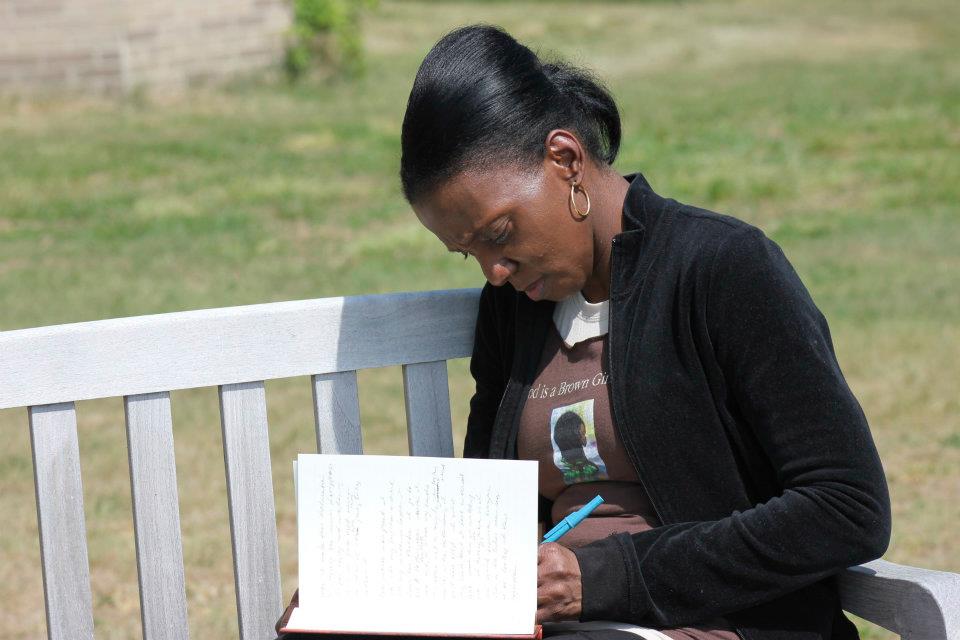
 Each Saturday, we devote ourselves to reading and discussing God is a Brown Girl Too on our “Self-Empowerment Call” from 9:30 AM to 10:30 AM, at 567-314-3648, Pass Code 48201.
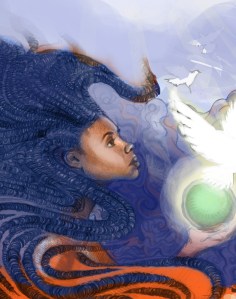
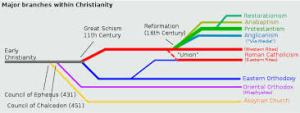
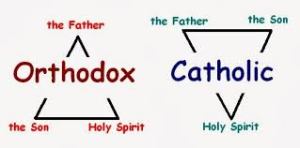
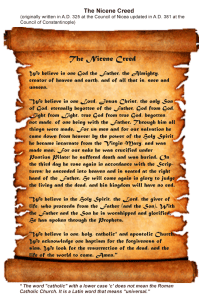 The First Council of Constantinople adopted a revised version of the 325 AD creed in 381 AD, which was the last time that Catholic and Orthodox communions would agree on a Credo. The phrase “and the Son”, which is the filioque in Latin, was added to the Nicene Creed at Synod of Toledo in Spain in 447 AD,