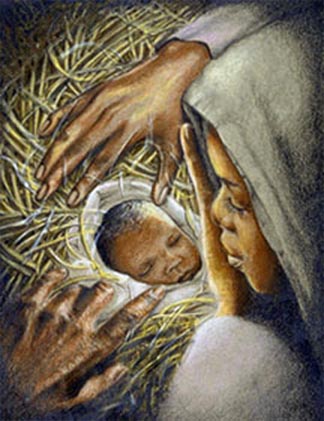
An African proverb says, the “wise aim at boundaries beyond the present; [and] by their struggle they transcend the circle of their beginning.”
 The Brown Girl dares to step out of the box of conventionality that has always excluded her – to envision a creation that is far more inclusive, one that sees beyond the European biblical tradition that “remade its past to suit its own interests”– and recalls ancient Africa’s place as the Motherland of creation.
 Moses says to the Israelites, “you forgot the God who gave you birth” (Deut. 32:18 NIV). Isaiah said that God cried out like “a woman in childbirth,” reminding her children that she upheld since conception and “carried … since… birth” (Isaiah 42:14, 46:3). It was this Mother God, Hosea recalls, who taught us to walk, who healed us, who lifted the yokes from our necks, who bent down to feed us (Hosea 11:3-4).
 Even Pope John Paul I recognized that God is not just our Father; “even more God is our [M]other.” Hence, we should not be limited to a male-dominated creation mythology that leaves out the Mother Creator.
 God as Mother is not merely Creator but is creativity itself.
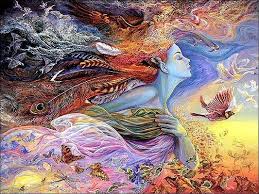 Creator as Mother is the epitome of Love: love as grace, love as compassion, love as peace, love as strength, love as power, love as wisdom, love as community, love as justice, love as faith, love as hope. Creator as Mother is not a gender – but is the energy of creation constantly and continuously creating itself.
 Few would dispute that due to European male dominance of Christianity as a tradition, God the Father governs the majority of our relationships with God. But that solely paternal relationship is often limited to the over-literalized metaphor that it is.
 The paternal image of God as Father has so monopolized “Christian speech about God that the equally legitimate and in some ways even more appropriate symbol of God as Mother [has been] eclipsed.” However, this historical, political, cultural, and economic dominance of man over woman does not dispel the Truth that God is greater than any pre-conceived notion of human sexuality or gender. God’s attributes as Creator can be better identified with the attributes of Mother as the major creative, life-giving force in the world.
 “Since it is women whose bodies bear, nourish, and deliver new persons into life and, as society is traditionally structured, are most often charged with the responsibility to nurture them into maturity, language about [Creator] as mother carries a unique power to express human relationship to the mystery who generates and cares for everything.”
 The Brown Girl, as a Columbian Indian, sings that God is “the mother of all races, the mother of all tribes. She is the mother of the thunder, mother of the rain and rivers, the mother of trees and all living things.” Of course, many if not most theologians choose to stay deeply embedded in a tradition merely because it is traditional; they refuse to entertain Creator as Mother since “the Bible speaks of God as ‘Father’” – fully ignoring the fact that the biblical image of God was created by men wrote the Bible.
 The Brown Girl – surrounded by the hatred and condemnation of a white male-dominated world, is a Creator who uplifts those who have been marginalized and demonized – putting them in their rightful place as equal heirs to the throne; a Creator who has “a mother’s love that makes the beloved beautiful”; a Creator whose love cannot be earned or merited but is “freely and abundantly given.”
 Creator as Mother generates everything and ensures that it flourishes. “Without origin, without source, without beginning,” Creator as Mother is not a gender but is creativity itself. “Creation is not something God did . . . Creation is something God does and is still doing.”
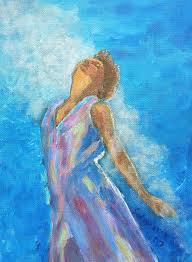 “There is a creative force constantly at work in man and all creation.” Creator as Mother is “sympathetic, comforting, loving, forgiving, and instantly healing,” with all “compassion and healing power of the Father at ‘Her’ command.”
 Those of us who are oppressed, marginalized, denigrated, and impoverished realize the presence of God when we understand that “every moment is the beginning of a new creation.” Creation did not begin and end in seven days; those days are just symbolic of the Truth that “[w]herever there is the evidence of creative action, there God is.”
 “God is closer to us than we are to ourselves.” We experience God through our expressions of the creative source. We are a living expression of God.
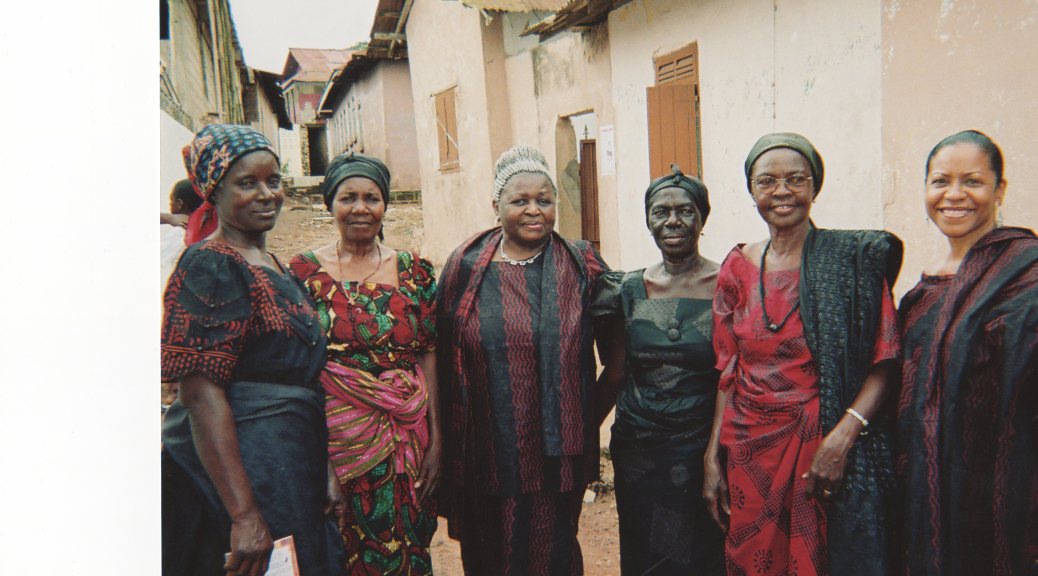
 I honor the Divine that birthed the unique being CALLED ME.
 I honor the Universal Ethers that formed every hair, every molecule, every fiber, every divine vibration of the I AM that I AM.
 I honor the Cosmic Womb that delivered the light that shines as me.
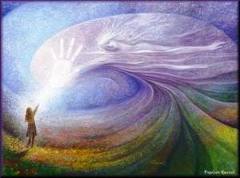 I honor the Spirit that carried me into this reality of absolute good that we call life.
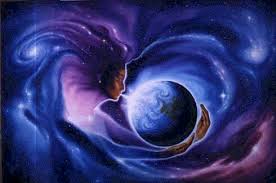 I honor the Perfect Harmony that called me from the endless bounty of this time space continuum before I was shaped in the womb.
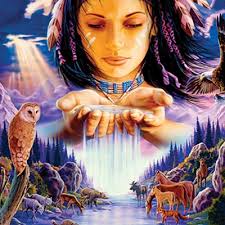 I honor the Souls who came before me and through whose legacy I began, not simply because I am, but because without them, I would never be.
 I honor the God that gave me a destiny in the irresistible vortex of my desires.
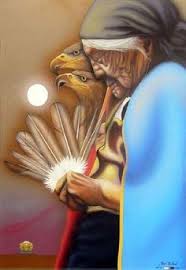 I honor the Ancestors — expressing through me the love of enlightened purpose and endless possibility.
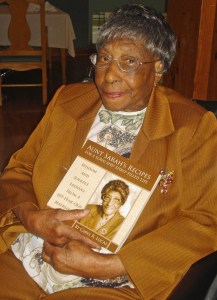 I honor the Christ that died for me because in the second that my Savior died I began.
 I honor the Breath that the Holy Ghost breathed as me in the transformational moment of my spiritual liberation.
 I honor my Mother, and in so doing, I honor all of who I AM.
 Mothers do not only bring out the best in us, they are the best in us.
 They are that aspect of us that sacrifices all to give to others.
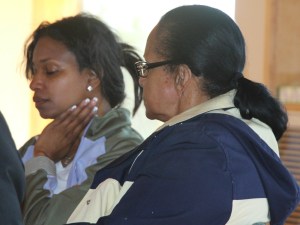 They are that co-creative side of us that will bring forth all energy, all resilience, all commitment, all compassion, all power to give birth to something greater than ourselves.
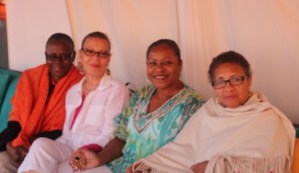 A mother is the deep wisdom in us that knows, really knows as much as God and sees through all appearances of things, and reaches beyond flesh to pull us back from waywardness to righteousness.
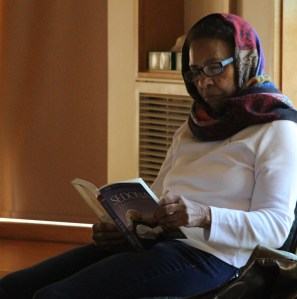 A mother is that balance in us of carefulness and carefree-ness, of resistance and release, of responsibility and blame, of praise and humility.
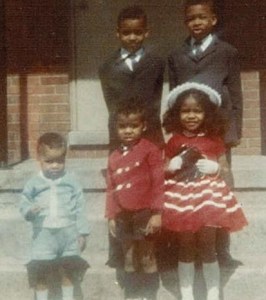
 My mother had 5 children, and from a very early age I wanted to emulate her and so I sat on the porch with about 5 dolls lined up under my care and protection because I appreciated the sacred act of mothering and the love that she gave me.
 Thich Nhat Hanh says that our mothers are so profoundly connected to us that they continue to nurture us even when they have left the fleshly realm, that they never stop giving us life, that we can always call on their support.
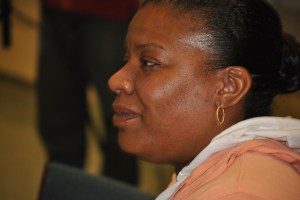
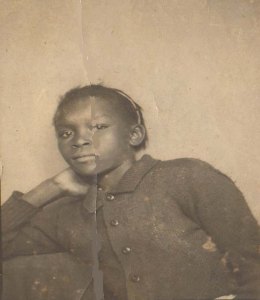 I have been a mother to you, and each one of you has been a mother to me. We will give birth to spiritual children while we live, and through our life and practice, we will continue to give birth even after we die.
 And so I want to give everyone an opportunity to celebrate the mother today: The mother who gave you birth; the mother who keeps giving you birth; and the mother in you; and the mother you will always be – even after you are no longer on the earthly realm.
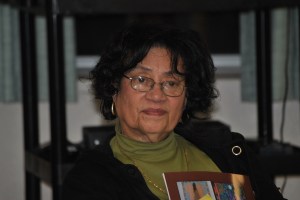 My Mother is a reservoir from which the continuous stream of good constantly flows into my life, a stream that has nothing to do with money or bank accounts — but flows endlessly from inexhaustible supply.
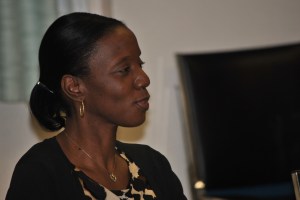
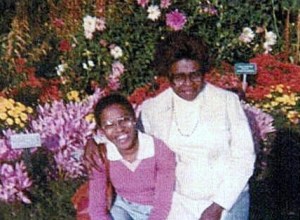 My mother is complete faith, unlimited joy and calming grace that blesses me with a life so wonderful that I have never even dared to imagine it.
 My mother is the divine ideas that keeps anointing me with fresh stories and new friends and untold strength and cosmic energy.
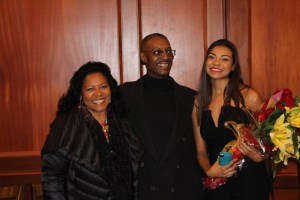 My mother is the success, overflowing from the abundance of gifts in the irresistible vortex of my desires.
 My mother moves through my life through a community called church and a vibrant connection of Oneness with each and every one of you.
 My mother is the freedom that resurrects me through the all-encompassing soul of my being.
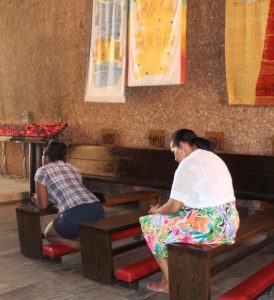 My mother is the prayer that is always answered and is always blessing me.
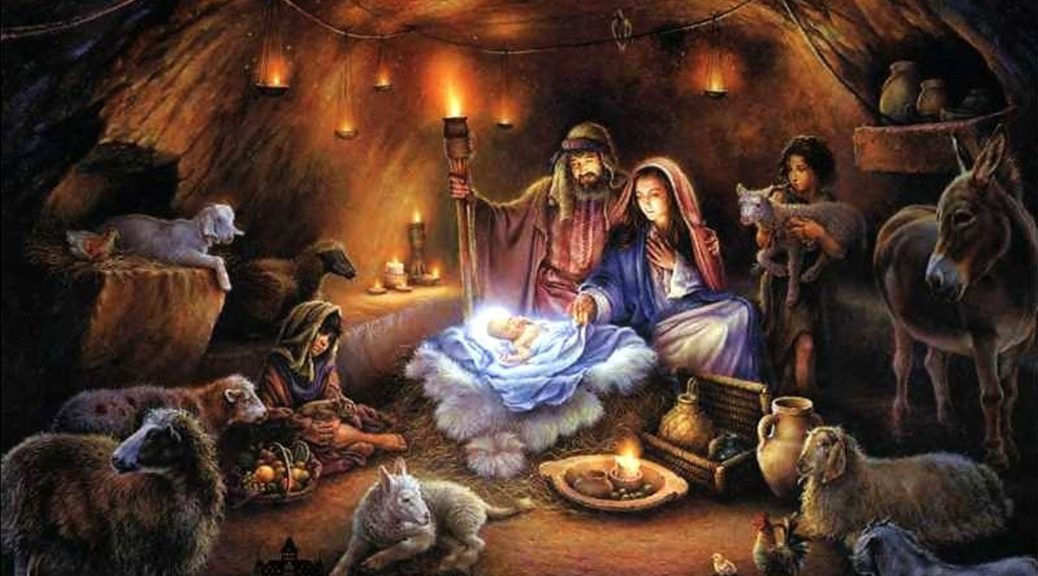
 Chicken Soup for the Soul tells the story of a priest who was so madly in love with his Christmas nativity scene that he often took a special inventory of his beloved life-sized plaster figurines and doted on his favorite, which was the Christ Child Jesus. So when the priest awoke on Christmas day to find the Christ Child missing from the manger, he almost lost his mind. He chastised his congregation about the theft, repeating his tirade at each Mass. Yet, the manger remained empty. In order to calm down, the priest took a meditative stroll. Where is the Christ Child? He had to have pondered again and again. What happened? Where is Christ?

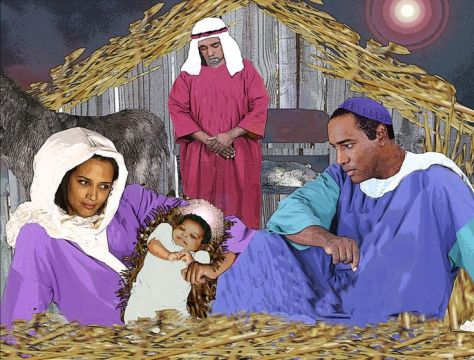
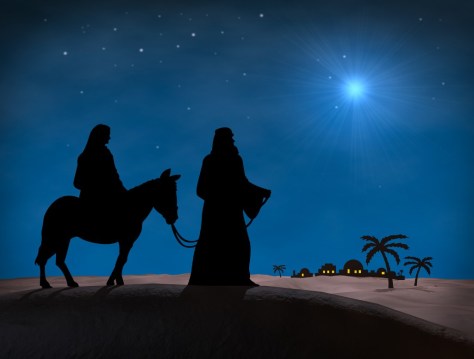
 During these weeks of Advent, the time during which many people prepare for the celebration of the birth of Christ through prayer, meditation and other forms of worship, it is important to re-visit our spiritual practice so that we develop a consistent way to tune into the Holy Spirit within us. The most priceless gift that can be given now is the remembrance of this divine connection that unites us all. God is always calling us to greater works than those who have gone before us, always breathing into us the power to do better, create more, and evolve beyond the pure potential of the infinite realm of possibilities. Now is the time to release whatever we allow to block our good and allow Spirit to do its good work. Now is the time to stop chasing the plaster figurines of your Baby Jesus and know that the Christ within you has never left.