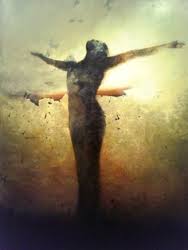
 This morning, I got up from my mat and walked. And God revealed a universe so remarkable, it was as though I had climbed through Alice’s looking glass. Just like Jesus told the man who had been lying by the pool of Bethesda for 38 years, I got up from my mat and experienced the beauty of wholeness that was right in my midst. It was as though I had put a foot in the healing water and then found myself wading knee-deep as the angels stirred in purpose, potential and endless possibility. All I had to do was get up from my mat of anticipation, and open my heart to receive the absolute good that is always awaiting us.
I walked the streets uphill to Prospect Park, and the sweetness of the sun anointed my face. I walked the wooden climb of the Brooklyn Bridge, and the symmetry of holy wings suspended me in a heavenly embrace. I walked the upward path through the open arms of the Brooklyn Botanical Gardens, and in the blink of an eye, I saw spring kissing winter good-bye. In the Gardens, I went through opened arms to an oasis of beauty, serenity and squirrels on a spirit-filled mission of their own. I walked uphill and downhill with anticipation of new life awakening with springtime, while summer lounged between moss-filled cracks, sleeping patiently.
 I walked right outside of the box containing who I once was — magically opening to who I know I AM — weeding out fear and doubt, pulling beyond conventionality, pushing past the ordinary to the extraordinary energy of God. I walked, baptized by fresh breezes; transformed by choirs of birds; sanctified by swaying trees. It was as though I could hear Jesus saying, “Get up! Pick up your mat and walk.” Get up from your contentment. Get up from your misery. Get up from your resentment. Get up from your jealousy. Get up from your pain. Be bold enough to step into the present moment. Enjoy the now. Release the past. Celebrate the awakening of a new season in your life.
Walk away from who you used to be. Walk away from your old stories, and sow a new one. Walk away from what you wished, or ought, or should, or would have done — and reap the salvation of what you are doing. Walk away from laziness and procrastination and seize the day to begin again. Walk away from the boundaries of your self-imposed limitations, and renew your soul with the unlimited power of Spirit.
 Walk and see the seeds of prayers wiggling through shoots of green. Walk and see daffodils dancing praises of deliverance. Walk and see God painting the landscape with new expectations of tulips and hyacinths and lavender, narcissus, honeysuckle, azaleas, and lilies — all awaiting their bloom. Walk and see the spaces where the fragrance of roses will ride the air, bless loving kisses, and witness.
Walk between the gaps of time where the Holy Ghost goes before you and awakens the glory of success. Walk before the hopes that ignite the wind and spread the ideas that create, and bless, and are never seen again. Days gone by have no space to hold the breath of infinite promises. We cannot find the future in the past. The best that we can possibly do is be liberated by the truth that nothing stays the same.
Freedom is the air. The Hybrid Oak knows it, and reaches its arms out in hallelujahs. The Cypress knows it, and bends its branches in humble prayer. The Shingle Oak knows it, and stands above the others in high praise. Again and again and again, they welcome us as though they have come to the altar for the first time.
 Walking in springtime is a meditation, an anointing, a shout, and a clap. Come. There is deliverance in the healing pool. The angels of nature will stir the waters of your salvation. All you have to do is take the time to see — really see God’s glory.
Namaste,
Reverend Cecilia Loving
Pastor, SPIRITMUV (www.spiritmuv.com )
To subscribe to newsletter, go to www.godisabrowngirltoo.com.
(All of the materials in SPIRITMUV email messages are copyrighted by and may not be used without the written permission of Cecilia Loving. )


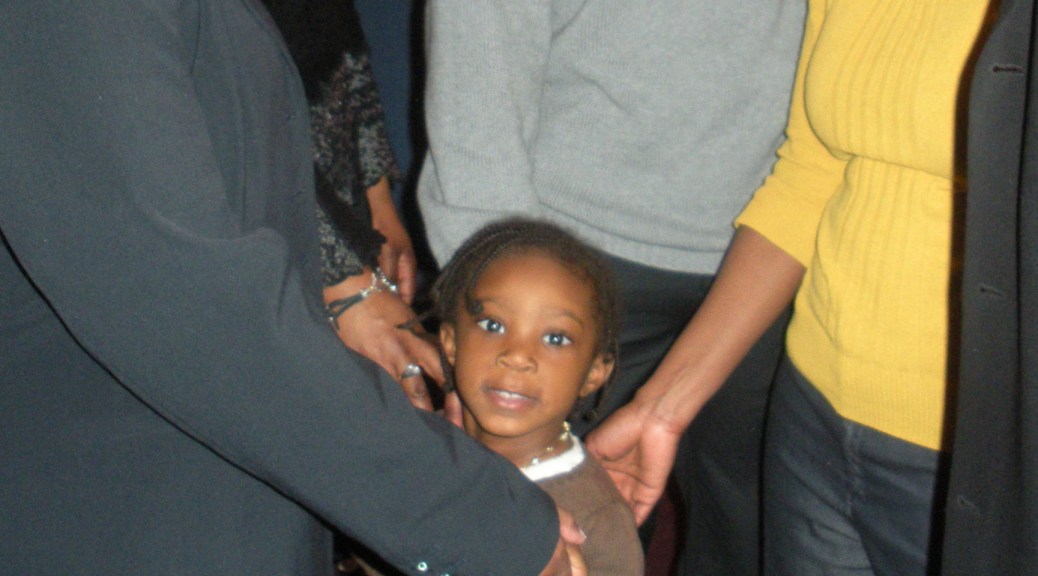
 Last Sunday, Spiritmuv had a special guest. She was three years old and about two and a half feet tall. She arrived on time, took off her coat, hugged those who came, and asked if she could pray at the beginning of the service. To our surprise, at the end of the service, she also took the initiative to step into the middle of the Spiritmuv prayer circle. We thought that we going to bless her, but the truth is that she blessed us. There was something about her purity of spirit that pulled us away from our “adult” cares and concerns to the sweetness and simplicity of Truth. God is good, and that’s all that matters.
 Jesus said, “Let the little children come to me, and do not hinder them, for the kingdom of heaven belongs to such as these.” (Matthew 19:14 NIV) The only way you can really see the goodness of Spirit is to look through the eyes of someone as genuine as a child. This means knowing that our Mother-Father-Everything-Almighty God can protect us from whatever the boogey-man brings us. This means seeing past appearances of disaster and despair to the inexhaustible supply of God.
 One of many things that bothers us about Haiti is to see the images of children suffering. But we have to remember the words of Jesus when asked about a man born blind. “Rabbi, who sinned,” the disciples asked, “this man or his parents, that he was born blind?” And Jesus answered, “Neither this man nor his parents sinned . . . but this happened so that the work of God might be displayed in his life.” (John 9:2-3) This happened so that the works of God might be made manifest.
 That’s why we were given the gifts of faith, strength, wisdom, regenerating love, power, imagination, understanding, will, order, zeal, renunciation, and generative life. (See Charles Fillmore, The Twelve Powers of Man (Unity Books: Unity Village, 1999)) We have the power to fix the broken, to cure the sick, to feed the hungry, to house the homeless, to uplift the downtrodden, to be the healing balm, to plant new lives and to restore old ones. As Jesus said, God is working through us to display something wonderful. That’s why children have huge imaginations, divine ideas that haven’t been diminished by “growing up.”
 When we “grow up,” we often lose the sheer joy of being because we start judging by appearances instead of by “righteous judgment.” We allow everybody’s else’s stiff-necked foolishness to usurp our energy and our focus, instead of just knowing that we are the manifestation of God’s good. We don’t want to see with an eye single toward the continuous stream of God’s good — when there is so much else to distract us. We are distracted by the unknown, limited by what we do know, and crazed by what we think we know.
 We say that we want to help Haiti, and giving money is a great start. But we might also want to help the Haiti in us — the turmoil, the discord, the danger, and the destruction — by loving those who are right in our midst. Have you told your parents how much you love them? Have you kissed your spouse and showed her or him just how much you appreciate them? Have you really been a friend to your so-called “friend”? Have you reached out to give to those who have given so much to you? Have you even been to church, or done anything to help in your community? Imagine how different the people of Haiti would respond to the call to love those thousands of beings who were lost in the earthquake.
 Are you willing to hang up your phone, or put down your glass of wine, or cut off your television long enough to join a circle of prayer? God has embraced each and every one of us with a heart of love that is ever-lasting — but we refuse to give that love back. We ignore our communities of faith and prefer to worship at the altar of despair. We throw in the towel at the slightest interruption to serve God. We stop going to church because we want to believe that community doesn’t matter. But Haiti reminds us that it does.
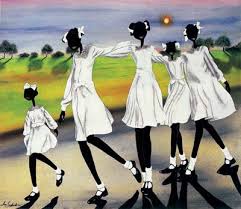 Promised Land — not you, but “your children who do not yet know good from bad-they will enter the land. I will give it to them and they will take possession of it.” ( Deuteronomy 1:39) We cannot manifest our good until we stop grumbling and start allowing ourselves to be the vehicle through which God constantly recreates.
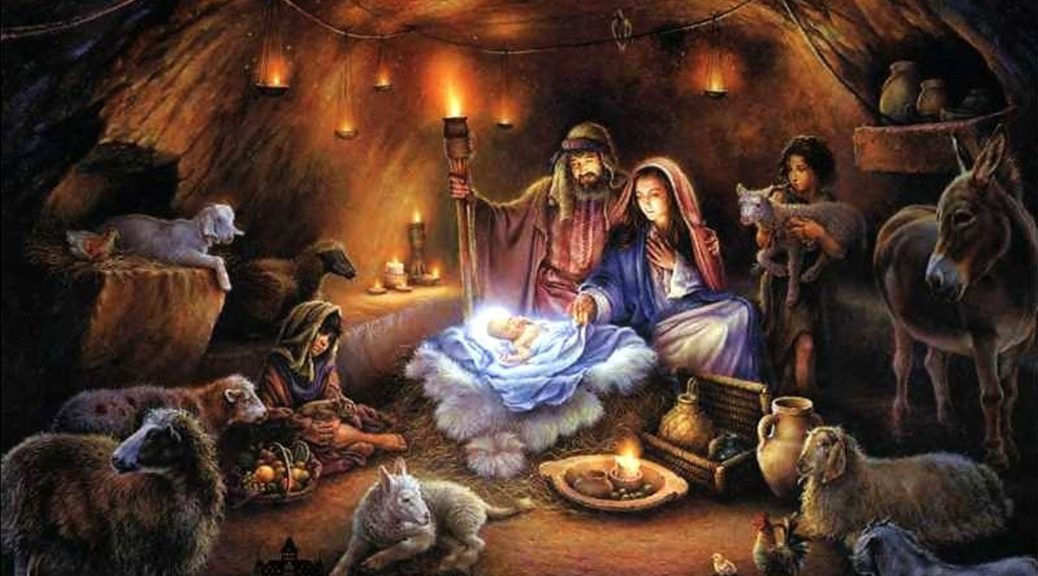
 Chicken Soup for the Soul tells the story of a priest who was so madly in love with his Christmas nativity scene that he often took a special inventory of his beloved life-sized plaster figurines and doted on his favorite, which was the Christ Child Jesus. So when the priest awoke on Christmas day to find the Christ Child missing from the manger, he almost lost his mind. He chastised his congregation about the theft, repeating his tirade at each Mass. Yet, the manger remained empty. In order to calm down, the priest took a meditative stroll. Where is the Christ Child? He had to have pondered again and again. What happened? Where is Christ?
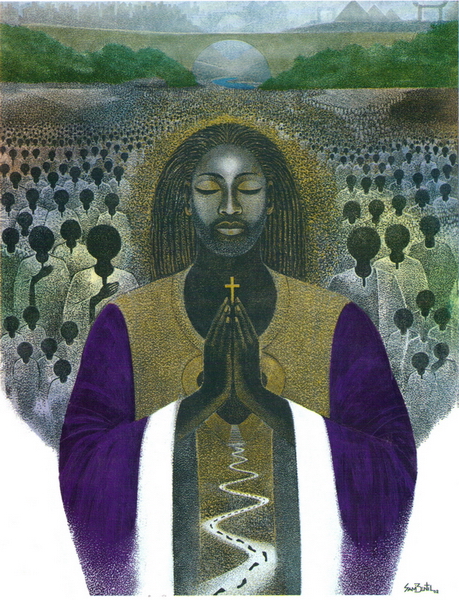


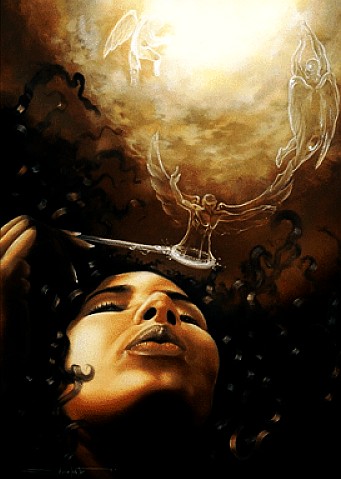

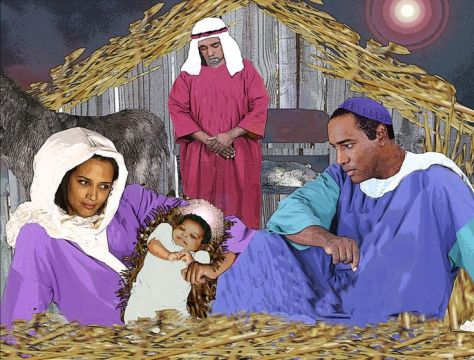
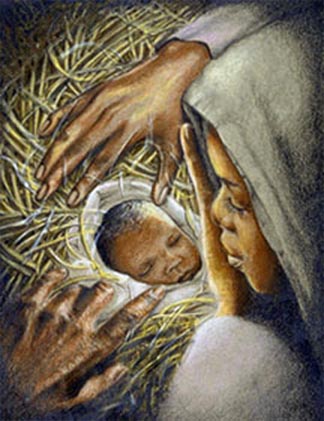
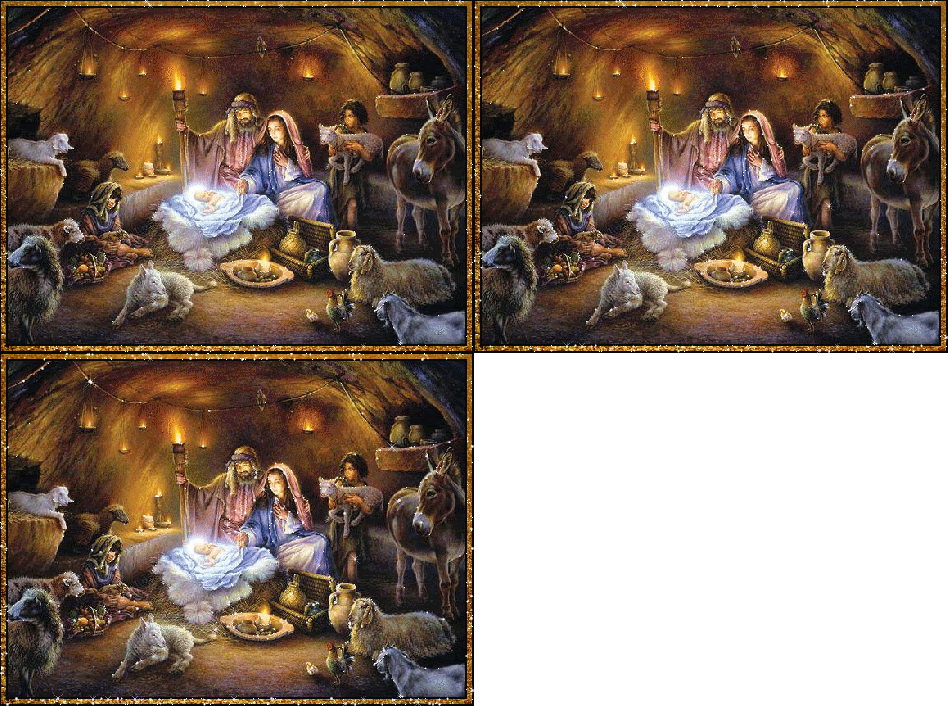 During these weeks of Advent, the time during which many people prepare for the celebration of the birth of Christ through prayer, meditation and other forms of worship, it is important to re-visit our spiritual practice so that we develop a consistent way to tune into the Holy Spirit within us. The most priceless gift that can be given now is the remembrance of this divine connection that unites us all. God is always calling us to greater works than those who have gone before us, always breathing into us the power to do better, create more, and evolve beyond the pure potential of the infinite realm of possibilities. Now is the time to release whatever we allow to block our good and allow Spirit to do its good work. Now is the time to stop chasing the plaster figurines of your Baby Jesus and know that the Christ within you has never left.

 A lot of people reading my book Prayers for Those Standing on the Edge of Greatness have told me that it has been a tremendous blessing in helping them release toxic relationships, negative energy, old baggage, and other stuff that we all have to clean up in order to move forward in our lives.
 Several weeks ago, at the SPIRITMUV Sunday Service, I addressed the commandment that best supports this process of spiritual de-cluttering, which is the Seventh Commandment: You shall not commit adultery. In the flesh, we believe that the Seventh Commandment is just about lying to others. But it is also about lying to ourselves. The only way that we can cleanse what we don’t need in our lives is to take an honest inventory of what’s there. Jesus taught that we should have so much integrity that if our right eye causes us to sin, we must “gouge it out and throw it away” and if our right hand causes us to sin, we must “cut it off and throw it away.”
 It takes a lot to cut off our hand or pluck out our eye and fortunately, it’s not required that we do it in the physical realm. But Jesus said, do the work. Do as much as you can to clean up your act. Only then, do you even begin to see the blessings behind the door upon which your heart knocks.
 The Seventh Commandment’s mandate to clean up our acts forces us to dig well beyond the appearances of the lives we lead to remove all of the complex lies that we hide in. In fact, I believe that a better way of saying this commandment is not that you must not cheat on others but that you must not cheat yourself. If you are lying to others, you are lying to yourself. If you are cheating yourself, you are not being your best nor are you attracting the best relationships and experiences to you.
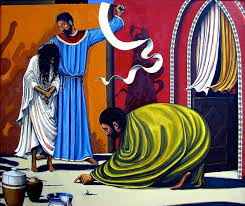 Eric Butterworth taught that you can be in a marriage committing adultery, even if you are faithful to your spouse in the physical sense. You are cheating your spouse and yourself if you don’t want to be in the marriage, but you don’t have the courage to leave. Any time you are dishonest, you are committing adultery because you are cheating your Highest Self, by living a lie. Jesus confronted everyone with their lies when he told the crowd at the Mount of Olives, let he who has no sin cast the first stone. (John 8:7 NIV)
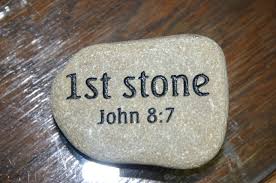 Not one of us is perfect. All of us have lied. All of us have cheated. All of us have sinned. Cleaning our own house does not permit finger-pointing, unless it is at ourselves. We know that each person on the Mount of Olives who had condemned the woman scorned disappeared when Jesus added the requirement that only those who had no sin could stone her. The Bible said that each person left one by one, “beginning with the oldest even to the last.” No one was spared.
 Cleaning our houses means that we let go of the past, step away from the person who we used to be, and move forward in the divine energy of renewed commitment. Jesus said, go and sin no more. (John 8:11) How exactly do we do that? Sometimes when we look at where we are, it seems overwhelming. First, we can start with the physical stuff. We can throw away or give away the papers, the boxes, the files, the clothes, and other stuff that we no longer need — in order to make room for the new. When we do this simple physical task, we open spaces in our consciousness to receive God’s good.
 Second, we can forgive the people, the situations and the circumstances that we have been holding onto. Sometimes we can’t do this part alone. So we pray to Spirit, to God, to Love to do the work through us. This often requires the heavy lifting of disappointments, pain and remorse. This requires us to stop hanging on to crutches and stop languishing in the belief that we are less than God’s anointed. Deep down inside, we are aware of the relationships that no longer serve our highest good, that are filled with jealousy and gossip and hatred.
 Albert Einstein said “arrows of hate have been shot at me too, but they never hit me because somehow they belong to another world with which I have no connection whatsoever.” (Michael Beckwith, quoting Einstein in Spiritual Liberation) The world that Einstein speaks of is one that is cleansed of his own bitterness and frustration, one where he has released whatever and whoever was not supportive of his higher good and greater purpose. As Arthur Schopenhauer indicated, we have to release those we thought were friends when they will not support our success.
 Third, we have to cleanse the consciousness and conduct that causes us to cheat ourselves out of being the divine creation that we are. This is even more difficult. In order to cast out the old hang-ups, fears and doubts, we have to first identify them; and then we have to be courageous enough to let them go. We have to be honest with ourselves about what causes us to fall short of what we want to accomplish in our lives. We have to be honest about what we need to do in order to demonstrate the power that we are blessed with.
 Of course, this is not a seasonal but an ongoing process of self-examination and self-discovery.


 But Ecclesiastes 3 teaches us that there is a time for everything and a season for every activity under the sun: a time to be born and a time to die, a time to plant and a time to uproot, and a time to heal, as well as a time to kill. One metaphysical interpretation is that Cain and Abel are two parts of a whole, or two aspects of our own consciousness. There are times when killing can take the form of releasing the negative energy from our own lives, times when we should release the old in order to give way to the new. The people, situations and circumstances that we experience change. When they do, there is no reason to hang on to them. We have to honor that regenerative part of life that uproots and restructures just in order to bless us with something new.


 In Genesis, God told Cain “sin is crouching at your door; it desires to have you, but you must master it.” And later, in the Sixth Commandment, Moses taught, “you shall not kill.” All of these passages mean that we must master our tendency to release and destroy with our need to create and demonstrate. Ultimately, it’s not what we harvest that matters but what we’ve learned through our sowing, pruning, weeding, and reaping. If we do the necessary cleaning, we can release the stuff that we don’t need and open a better space to honor whatever remains. We can look at ourselves with new eyes and a brand new possibility of salvation, not based on who we once were, but who we are.