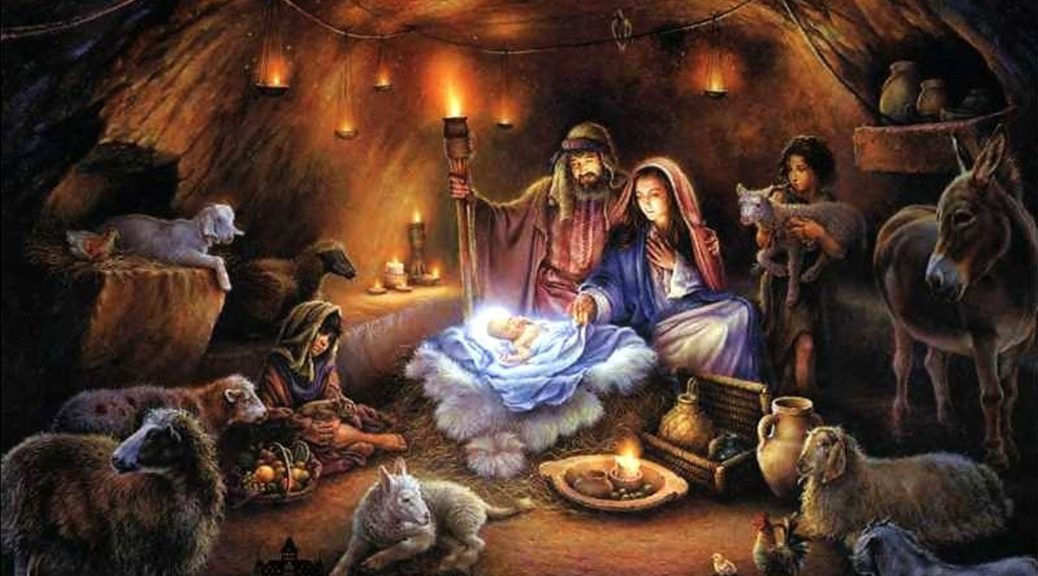
 Chicken Soup for the Soul tells the story of a priest who was so madly in love with his Christmas nativity scene that he often took a special inventory of his beloved life-sized plaster figurines and doted on his favorite, which was the Christ Child Jesus. So when the priest awoke on Christmas day to find the Christ Child missing from the manger, he almost lost his mind. He chastised his congregation about the theft, repeating his tirade at each Mass. Yet, the manger remained empty. In order to calm down, the priest took a meditative stroll. Where is the Christ Child? He had to have pondered again and again. What happened? Where is Christ?
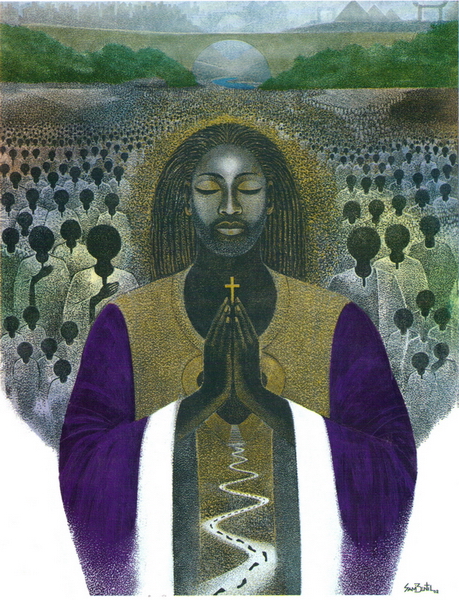
In John 14, Jesus said I might not always be with you in the flesh, but God is going to send the Counselor to be with you forever. Jesus called that Counselor “the Spirit of truth”, who Jesus said would live in us and be in us. He said, “I will not leave you as orphans; I will come to you. Before long, the world will not see me anymore, but you will see me. Because I live, you also will live. On that day you will realize that I am in my Father, and you are in me, and I am in you.”

In other words, Jesus Christ is not really in our nativity scenes, even though we remember him there. Jesus Christ is not really on our symbolic cross, even though we carry him there. Jesus Christ is not limited to plaster or plastic or wood or silver or gold. Jesus Christ did not limit himself to the physical but taught about the oneness of the spiritual realm. He said, I am in my Father, and you are in me, and I am in you — not just in a manger or a scroll or a prayer. He said I am a reality that you touch every day. I am in every breath that you breathe and space that you take up.

In his wonderful book, Going Home: Jesus and Buddha as Brothers, Thich Nhat Hanh, a Buddhist monk, says that Jesus is born every time the Holy Spirit in us is touched. He says that “The Christ within us is waiting for each minute to be born again and again.” Thich Nhat Hanh says that “the Holy Son has been born in you as a baby, but maybe it’s not strong yet. You have to strengthen and cultivate the Holy Spirit in you.” You have to practice your awareness of the Holy Spirit’s presence. Otherwise, you will miss the beauty of the Christ that is right within your midst.
The Chicken Soup story says that the priest — worried about the missing Christ Child — walked through his neighborhood. As he walked, he saw one of the smallest members of his flock — bundled shabbily against the cold, dragging behind him a brand new red wagon. The priest was touched by how much sacrifice the boy’s family must have made to get him a brand new red wagon. So, he quickly caught up with the boy to wish him a Merry Christmas. But when the priest caught up with the boy, he could see that the wagon was not empty. Right there, in plain view, was the Christ Child wrapped in a blanket.

Grimly, the Priest stopped the boy and lectured him profusely: stealing was a sin — and robbing the church of such a sacred image — was an even greater one.
“But Father!” the little boy cried out after the Priest’s tongue lashing was over , “I didn’t steal the Christ child. It wasn’t like that at all. It’s just that I was praying to Him for a red wagon for Christmas — and I promised him that if I got it, I would take him out for the first ride!”
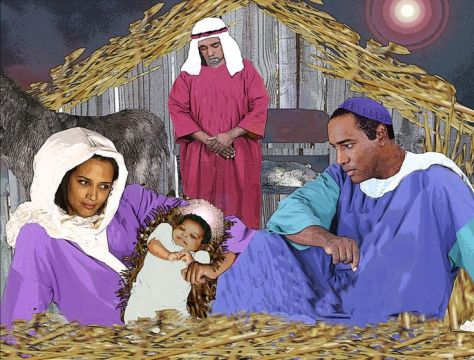
Where is Christ? The Christ left the manger eons ago. The Christ was resurrected in us as the Holy Spirit to teach us the power of the Divine Mind — over the material world, over plaster and plastic, and even flesh. The Christ lives within us in a place that never grows old, never grows weary, never grows tired, never needs surgery, never feels the economic decline or its surge because it is full and complete in the inexhaustible everything of all that God is. Jesus did not leave us comfortless. He is always present as the Holy Ghost — to teach us all things. The great Hindu spiritual teacher Paramahansa Yogananda, in The Second Coming of Christ: The Resurrection of the Christ Within You, says that this is not the body but the omnipresent Christ Consciousness present in all creation.
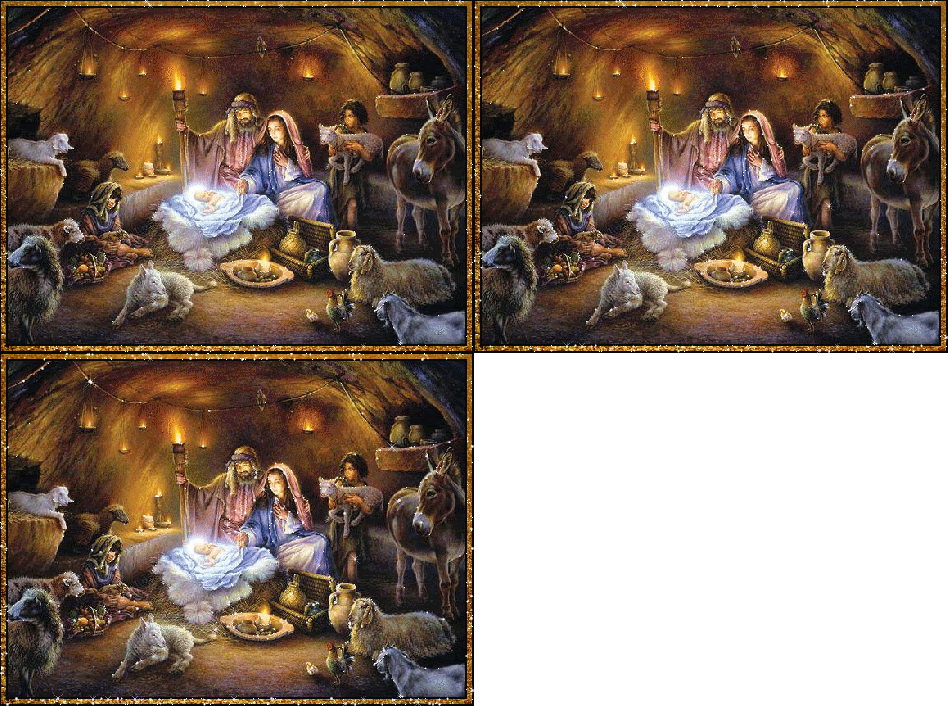 During these weeks of Advent, the time during which many people prepare for the celebration of the birth of Christ through prayer, meditation and other forms of worship, it is important to re-visit our spiritual practice so that we develop a consistent way to tune into the Holy Spirit within us. The most priceless gift that can be given now is the remembrance of this divine connection that unites us all. God is always calling us to greater works than those who have gone before us, always breathing into us the power to do better, create more, and evolve beyond the pure potential of the infinite realm of possibilities. Now is the time to release whatever we allow to block our good and allow Spirit to do its good work. Now is the time to stop chasing the plaster figurines of your Baby Jesus and know that the Christ within you has never left.
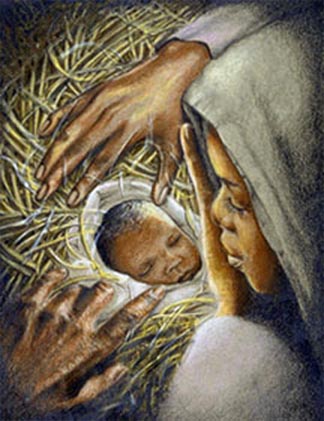
Reverend Cecilia Loving
Pastor,SPIRITMUV http://www.spiritmuv.com http://www.godisabrowngirltoo.com
(All of the materials in SPIRITMUV email messages are copyrighted by and may not be used without the written permission of Cecilia Loving. If you want to be included in the weekly audio prayer distribution, please email us with your request. You can also blog atwww.spiritmuv.wordpress.com)

 A lot of people reading my book Prayers for Those Standing on the Edge of Greatness have told me that it has been a tremendous blessing in helping them release toxic relationships, negative energy, old baggage, and other stuff that we all have to clean up in order to move forward in our lives.
 Several weeks ago, at the SPIRITMUV Sunday Service, I addressed the commandment that best supports this process of spiritual de-cluttering, which is the Seventh Commandment: You shall not commit adultery. In the flesh, we believe that the Seventh Commandment is just about lying to others. But it is also about lying to ourselves. The only way that we can cleanse what we don’t need in our lives is to take an honest inventory of what’s there. Jesus taught that we should have so much integrity that if our right eye causes us to sin, we must “gouge it out and throw it away” and if our right hand causes us to sin, we must “cut it off and throw it away.”
 It takes a lot to cut off our hand or pluck out our eye and fortunately, it’s not required that we do it in the physical realm. But Jesus said, do the work. Do as much as you can to clean up your act. Only then, do you even begin to see the blessings behind the door upon which your heart knocks.
 The Seventh Commandment’s mandate to clean up our acts forces us to dig well beyond the appearances of the lives we lead to remove all of the complex lies that we hide in. In fact, I believe that a better way of saying this commandment is not that you must not cheat on others but that you must not cheat yourself. If you are lying to others, you are lying to yourself. If you are cheating yourself, you are not being your best nor are you attracting the best relationships and experiences to you.
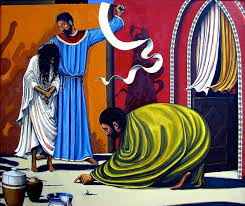 Eric Butterworth taught that you can be in a marriage committing adultery, even if you are faithful to your spouse in the physical sense. You are cheating your spouse and yourself if you don’t want to be in the marriage, but you don’t have the courage to leave. Any time you are dishonest, you are committing adultery because you are cheating your Highest Self, by living a lie. Jesus confronted everyone with their lies when he told the crowd at the Mount of Olives, let he who has no sin cast the first stone. (John 8:7 NIV)
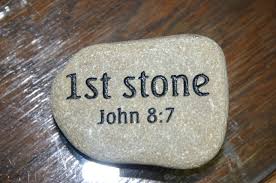 Not one of us is perfect. All of us have lied. All of us have cheated. All of us have sinned. Cleaning our own house does not permit finger-pointing, unless it is at ourselves. We know that each person on the Mount of Olives who had condemned the woman scorned disappeared when Jesus added the requirement that only those who had no sin could stone her. The Bible said that each person left one by one, “beginning with the oldest even to the last.” No one was spared.
 Cleaning our houses means that we let go of the past, step away from the person who we used to be, and move forward in the divine energy of renewed commitment. Jesus said, go and sin no more. (John 8:11) How exactly do we do that? Sometimes when we look at where we are, it seems overwhelming. First, we can start with the physical stuff. We can throw away or give away the papers, the boxes, the files, the clothes, and other stuff that we no longer need — in order to make room for the new. When we do this simple physical task, we open spaces in our consciousness to receive God’s good.
 Second, we can forgive the people, the situations and the circumstances that we have been holding onto. Sometimes we can’t do this part alone. So we pray to Spirit, to God, to Love to do the work through us. This often requires the heavy lifting of disappointments, pain and remorse. This requires us to stop hanging on to crutches and stop languishing in the belief that we are less than God’s anointed. Deep down inside, we are aware of the relationships that no longer serve our highest good, that are filled with jealousy and gossip and hatred.
 Albert Einstein said “arrows of hate have been shot at me too, but they never hit me because somehow they belong to another world with which I have no connection whatsoever.” (Michael Beckwith, quoting Einstein in Spiritual Liberation) The world that Einstein speaks of is one that is cleansed of his own bitterness and frustration, one where he has released whatever and whoever was not supportive of his higher good and greater purpose. As Arthur Schopenhauer indicated, we have to release those we thought were friends when they will not support our success.
 Third, we have to cleanse the consciousness and conduct that causes us to cheat ourselves out of being the divine creation that we are. This is even more difficult. In order to cast out the old hang-ups, fears and doubts, we have to first identify them; and then we have to be courageous enough to let them go. We have to be honest with ourselves about what causes us to fall short of what we want to accomplish in our lives. We have to be honest about what we need to do in order to demonstrate the power that we are blessed with.
 Of course, this is not a seasonal but an ongoing process of self-examination and self-discovery.


 But Ecclesiastes 3 teaches us that there is a time for everything and a season for every activity under the sun: a time to be born and a time to die, a time to plant and a time to uproot, and a time to heal, as well as a time to kill. One metaphysical interpretation is that Cain and Abel are two parts of a whole, or two aspects of our own consciousness. There are times when killing can take the form of releasing the negative energy from our own lives, times when we should release the old in order to give way to the new. The people, situations and circumstances that we experience change. When they do, there is no reason to hang on to them. We have to honor that regenerative part of life that uproots and restructures just in order to bless us with something new.


 In Genesis, God told Cain “sin is crouching at your door; it desires to have you, but you must master it.” And later, in the Sixth Commandment, Moses taught, “you shall not kill.” All of these passages mean that we must master our tendency to release and destroy with our need to create and demonstrate. Ultimately, it’s not what we harvest that matters but what we’ve learned through our sowing, pruning, weeding, and reaping. If we do the necessary cleaning, we can release the stuff that we don’t need and open a better space to honor whatever remains. We can look at ourselves with new eyes and a brand new possibility of salvation, not based on who we once were, but who we are.